Why your garage door reverses before it closes
Before you price a new opener, look at the two small eyes near the floor.
September 16, 2026 · 4 min read
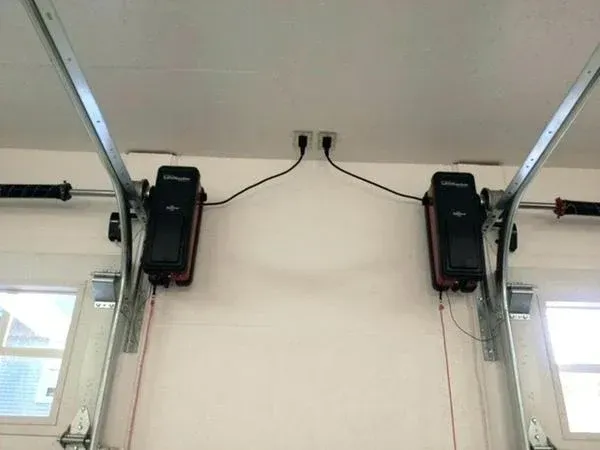
A door that refuses to stay shut is one of the most common calls we take, and one of the most commonly misdiagnosed by the person living with it. The instinct is to blame the opener, because the opener is the part that appears to be misbehaving. It usually is not the opener.
What the sensors are and where they live
Every garage door opener made since the early nineteen nineties has a pair of photo eyes mounted near the floor, one on each side of the opening, usually about six inches up. One sends an infrared beam across the opening and the other receives it. If the beam is broken while the door is closing, the opener stops and reverses, on the assumption that a child, a pet or a bicycle is in the way.
The system is deliberately unforgiving. It is designed to reverse on any doubt at all, because the alternative is a heavy door closing onto something living. That is why a minor knock produces a total refusal to close.
The usual causes, in the order worth checking
- Alignment. A bag of compost, a bike pedal or a vacuum cleaner has nudged one bracket. Most openers show a steady light on both sensors when aligned and a flashing or dark light on one when not.
- A dirty lens. Dust, cobwebs and condensation all scatter the beam. A wipe with a dry cloth fixes more of these than people expect.
- Something genuinely in the path. Low objects near the opening are easy to stop seeing after a while.
- Sunlight. Low winter sun striking the receiving eye directly can swamp the beam at certain times of day, which produces a fault that appears and disappears on a schedule.
- Damaged wiring. The cable running up to the opener gets caught, pinched or nibbled, and the sensor loses its connection intermittently.
Work down that list before concluding anything. The first two account for the majority of sensor callouts, and both are free to try.
When it is not the sensors
There are two other causes worth knowing, because they present similarly and need a different fix.
The first is the close force or travel limit setting on the opener. If the opener believes the door should be fully closed before it actually is, it reads the remaining travel as an obstruction and reverses. This tends to appear after somebody has adjusted something, or seasonally as the door and the opening move slightly with temperature.
The second is a mechanical obstruction in the door itself. A roller that binds at a particular point in the travel, or a track that has been knocked, will produce resistance that the opener correctly interprets as something in the way. In that case the opener is behaving exactly as designed and the door is the problem.
What not to do
Do not disable, bypass or tape over the sensors. It is occasionally suggested online as a workaround, and it removes the one system standing between a heavy moving door and whatever is underneath it. If the sensors are faulty they should be replaced, which is inexpensive work.
Do not hold the wall button down to force the door shut as a permanent arrangement. Most openers allow a constant pressure override for exactly this situation, and it is fine as a temporary measure to secure the garage for a night. It is not a fix, and it relies on somebody being present and watching.
Getting it sorted
Sensor alignment and cleaning is short work. Replacing a failed sensor or a damaged run of cable is not much longer. We service LiftMaster and Genie openers and supply remotes and keypads, including where the original remote disappeared years ago.
One thing we check on every opener visit, which is easy to skip, is the balance of the door itself. An opener that has started to struggle is frequently carrying weight the spring should be carrying. Condemning the motor without checking the spring is how people buy an opener they did not need.
Testing the safety systems yourself
There are two separate safety systems on a modern opener and they are worth testing twice a year. The first is the photo eyes. With the door open, press the button to close it and wave a broom handle through the beam near the floor. The door should stop and reverse immediately. If it hesitates or continues, the sensors need attention.
The second is the mechanical auto reverse, which works on resistance rather than on the beam. Lay a length of timber flat on the floor in the middle of the opening and close the door onto it. The door should touch the timber, sense the obstruction and reverse. If it keeps pushing, the close force setting is too high, and that is a genuine hazard rather than an inconvenience. Both tests take a couple of minutes and neither requires any tools.
Dave's Door covers Enumclaw and King County. Estimates are free, and opener labour carries a one year warranty with the manufacturer warranty on the parts.
Dave's Door, (253) 740-8335
Call (253) 740-8335More articles
Your garage door spring just broke. Here is what to do next.
It usually announces itself with a bang from the garage and a door that will not lift.
Repair or replace: where the line actually falls on a garage door
A single failed part is almost always worth replacing. A door that keeps eating parts is a different conversation.