Commercial and warehouse
A door out of service is a bay out of service.
Sectional steel, roll up and coiling, high speed overhead and heavy duty commercial doors, plus the dock equipment around them. Installed, repaired and kept running.
Chapter 01
The doors, and what each is for
Sectional steel doors are the commercial equivalent of a domestic door and suit bays that open and close a handful of times a day. Roll up and coiling doors take up almost no headroom, which is why they dominate where the ceiling is already carrying services or racking.
High speed overhead doors are the answer where the cycle count is high or where temperature separation matters. They cost more and they earn it back in cycles, so they are worth specifying deliberately rather than by default.
Insulated warehouse doors and heavy duty commercial units round it out. Where a door is on a high cycle count, the hardware specification matters more than the door skin, and a high cycle spring is the single most useful upgrade on a busy bay.
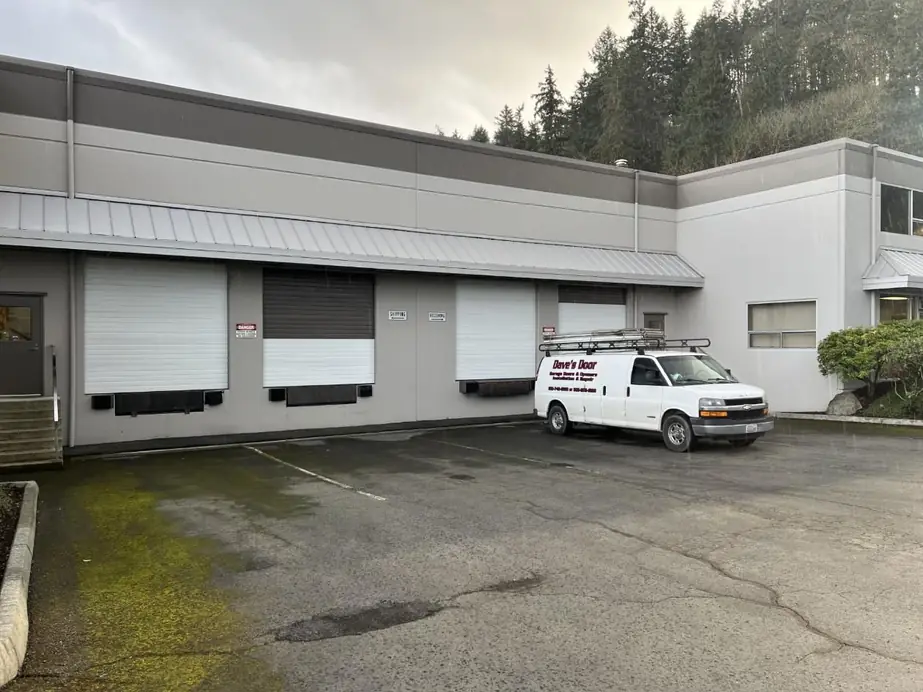
The Dave's Door van at a commercial loading dock with roll up doors
Loading dock doors and the equipment around them
The door is rarely the only thing at the opening. Dock levelers, dock seals and bumpers all take a beating, and a failed leveler stops loading just as completely as a failed door does.
We install and repair dock levelers, seals and bumpers, heavy duty steel doors, rolling and coiling doors, and high cycle commercial doors, and we treat the opening as one system rather than as separate items with separate visits.
Commercial repair covers spring and cable work, panel and track repairs, motor and opener troubleshooting, roller, hinge and hardware replacement, and door alignment and balancing. Emergency commercial repair is available for a bay that cannot wait.
Chapter 03
Maintenance programmes for sites that cannot lose a bay
A preventative maintenance programme is a scheduled visit rather than a reactive one: full door system inspection, lubrication, opener and motor checks, safety system testing, and hardware tightening and adjustment.
The argument for it on a commercial site is simply arithmetic. A scheduled visit is planned around your operation. An emergency callout happens at whatever moment the door chooses, usually mid load, and it takes the bay with it until it is fixed.
Sites with several openings can put the whole lot on one schedule so the inspection happens in a single visit.
Licensed, bonded and insured in Washington, with 1 million dollars of liability cover and no L&I violations on record.