Openers
An opener almost always tells you it is going before it goes.
Chain, belt, jackshaft and screw drive units, serviced and replaced. We work on LiftMaster and Genie, supply remotes, and align the safety sensors that cause more callouts than anything else.
Chapter 01
Four drives, and which one suits the garage
A chain drive is the traditional unit. It is the most robust and the cheapest to replace, and it is also the loudest, which matters if there is a bedroom over the garage. On a detached garage it is usually the sensible choice.
A belt drive does the same work through a reinforced rubber belt and is markedly quieter. It is the default recommendation for an attached garage with living space above it.
A jackshaft opener mounts on the wall beside the torsion shaft instead of hanging from the ceiling. It is the answer where headroom is tight, where the ceiling is high, or where you want the ceiling space kept clear. Screw drive units sit between chain and belt, with fewer moving parts and a tolerance for temperature swings.
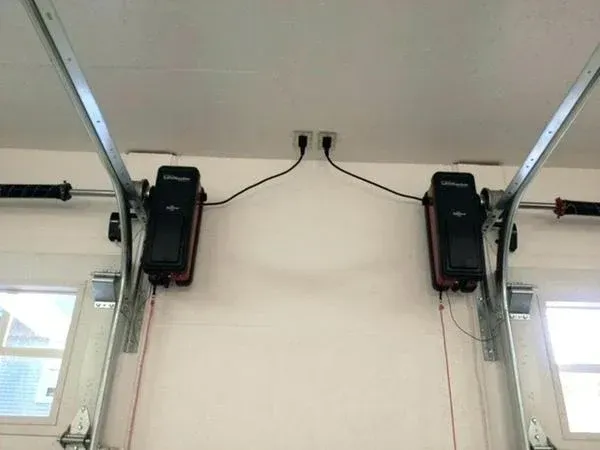
Two LiftMaster wall mount jackshaft openers installed side by side in a garage
Safety sensors, and why the door keeps reversing
The single most common opener callout is not a failed motor. It is the pair of photo eyes near the floor on each side of the opening. Knock one out of alignment with a bike or a bag of compost and the door will refuse to close, or will start down and reverse straight back up.
Often the fix is alignment and a clean lens, and that is a short visit. Where a sensor or its wiring has actually failed, it gets replaced. Either way the sensors get tested before we leave, because a door that closes on an obstruction is the failure mode the sensors exist to prevent.
Remotes and keypads are the other routine item. We supply and program replacements, including where the original remote is long gone.
Chapter 03
What a failing opener sounds like
A grinding noise with the door barely moving usually means a stripped drive gear, which is a repair rather than a replacement on most units. A motor that hums without the door moving is often the same story from the other end.
Rattling and slapping from a chain that has gone slack is an adjustment. A rhythmic clunk on every travel is more likely to be a roller or hinge on the door itself rather than the opener, which is why we look at the whole assembly rather than only the motor.
Worth knowing: an opener that has started to struggle is frequently a spring problem wearing a motor disguise. If the spring is not carrying the door properly, the opener is lifting weight it was never sized for. We check the balance by hand before condemning a motor.
Opener labour carries a one year warranty, and parts carry the manufacturer warranty. We will meet any competitor's price on garage door services.